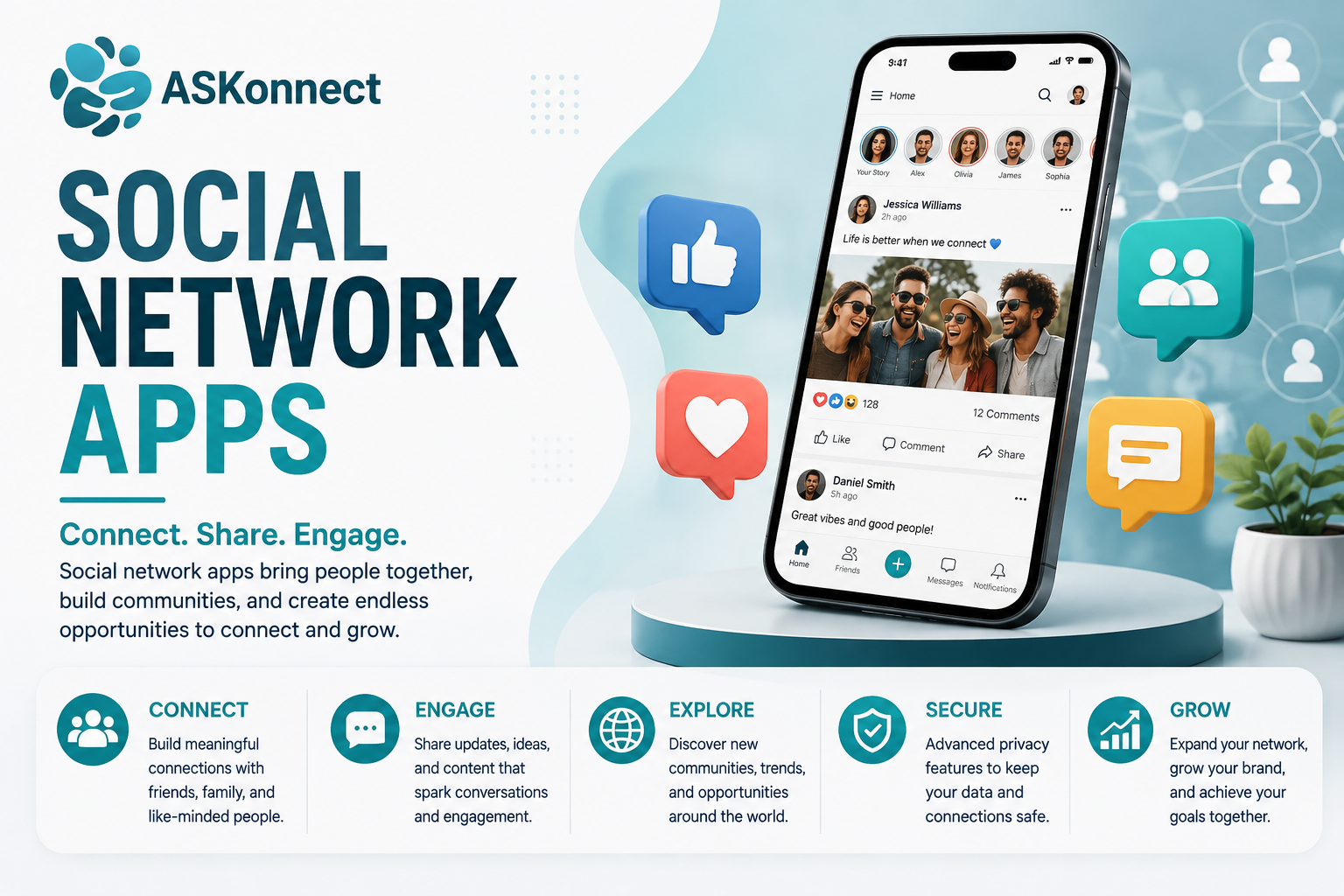
Social network apps have become an important part of everyday digital life. Whether people want to stay connected with friends, discover new communities, promote a business, share content, or follow current trends, social network apps provide convenient ways to communicate and interact online.
From messaging and photo sharing to professional networking and community discussions, these apps serve different purposes for different audiences. But with hundreds of platforms available today, understanding how social network apps work and choosing the right one can be challenging.
In this guide, we’ll explore what social network apps are, the different types available, their benefits, potential drawbacks, and how to choose the best platform for your needs.
What are Social Network Apps?
Social network apps are mobile or web-based applications that allow people to create profiles, connect with other users, communicate, and share or discover content.
Depending on the platform, users may be able to:
- Create personal or professional profiles
- Add friends or followers
- Send direct messages
- Publish photos, videos, or written posts
- Join communities and groups
- Comment on and react to content
- Share posts with other users
- Follow brands, creators, organizations, or public figures
- Participate in live streams and online discussions
The primary purpose of social network apps is to facilitate digital interaction. However, modern platforms have expanded far beyond simple communication and now support entertainment, education, marketing, networking, customer service, and even online commerce.
Why are Social Network Apps So Popular?
The popularity of social network apps comes largely from their convenience. Users can communicate and access content from almost anywhere using a smartphone.
Several factors contribute to their widespread use.
1. Easy Communication
Social network apps make it possible to communicate instantly through messages, voice calls, video calls, comments, and other interactive features.
Instead of relying solely on traditional communication methods, users can maintain relationships across cities and countries with just a few taps.
2. Content Sharing
Users can share experiences, opinions, photographs, videos, articles, and other forms of content. This makes social platforms valuable for both personal expression and professional communication.
3. Online Communities
Many social network apps allow people with similar interests to form communities. These communities can focus on hobbies, professional industries, education, entertainment, sports, or other subjects.
4. Business Opportunities
Businesses use social network apps to increase brand visibility, communicate with customers, promote products, and generate leads.
A well-managed social presence can help businesses establish credibility and maintain relationships with existing and potential customers.
5. Personalized Content
Most modern social platforms use recommendation systems to show users content based on their interactions, interests, and activity. This can make discovering relevant content faster and more engaging.
Different Types of Social Network Apps
Not every social network app serves the same purpose. Platforms can generally be divided into several categories.
General Social Networking Apps
These platforms are designed for broad audiences and provide multiple communication and content-sharing features.
Users can typically create profiles, connect with others, publish content, and participate in communities.
Professional Networking Apps
Professional networking platforms focus on careers, employment, business relationships, and industry connections.
They can be particularly useful for:
- Job seekers
- Recruiters
- Freelancers
- Entrepreneurs
- Business owners
- Industry professionals
Users can showcase their experience, connect with professionals, discover job opportunities, and share industry-related content.
Photo and Video Sharing Apps
These platforms focus primarily on visual content. Users can publish photographs, short-form videos, stories, live broadcasts, and other visual media.
They are especially popular among creators, influencers, photographers, designers, and businesses that rely heavily on visual marketing.
Messaging-Based Social Apps
Messaging platforms combine communication with social features. Users may communicate privately, create group conversations, share multimedia content, and participate in communities.
These apps are often used for both personal communication and business customer support.
Discussion and Community Apps
Community-focused platforms allow users to participate in discussions around specific interests or topics.
They can be useful for asking questions, sharing experiences, learning from other users, and discovering niche communities.
Short-Form Video Apps
Short-form video platforms allow users to create and consume brief videos, often supported by algorithmic recommendations.
These apps have become important channels for entertainment, education, product discovery, and digital marketing.
Benefits of Social Network Apps
When used responsibly, social network apps can offer significant benefits.
Staying Connected
One of the biggest advantages is the ability to maintain relationships regardless of physical distance. Friends, families, colleagues, and communities can remain connected through regular digital interaction.
Discovering Information
Social platforms can expose users to news, educational resources, industry updates, tutorials, and expert opinions.
However, users should verify important information rather than assuming every social media post is accurate.
Building Professional Relationships
Professionals can use social networking apps to connect with employers, clients, colleagues, and industry experts.
Consistent participation can help individuals establish an online professional presence.
Supporting Businesses
Social network apps give businesses another channel for reaching potential customers.
Companies can use them to:
- Promote products and services
- Publish educational content
- Answer customer questions
- Collect feedback
- Build brand awareness
- Drive website traffic
- Develop customer relationships
Creating Communities
Social platforms can bring together people who share common interests or experiences. This can make it easier for users to find support, exchange knowledge, and participate in meaningful conversations.
How Businesses Can Use Social Network Apps Effectively?
Having an account on every platform is not necessarily the best strategy. Businesses should focus on platforms where their target audience is actually active.
Understand Your Audience
Before selecting a platform, identify your target customers.
Consider factors such as:
- Age
- Location
- Interests
- Profession
- Purchasing behavior
- Preferred content formats
This information can help determine which social network apps deserve your attention.
Create Valuable Content
Successful social media marketing is not simply about posting frequently. Content should provide value to the intended audience.
Depending on the business, useful content might include:
- Educational guides
- Product demonstrations
- Customer stories
- Industry insights
- Frequently asked questions
- Behind-the-scenes content
- Short videos
- Expert advice
Maintain Consistency
A consistent publishing schedule can make a business profile appear more active and reliable. However, consistency should not come at the expense of quality.
Engage With Your Audience
Social networking is a two-way communication channel. Businesses should respond to relevant comments, questions, reviews, and messages.
Meaningful engagement can strengthen relationships and improve the overall customer experience.
Measure Performance
Businesses should monitor relevant metrics rather than relying solely on follower counts.
Useful metrics can include:
- Engagement rate
- Website visits
- Leads
- Conversions
- Video views
- Click-through rate
- Audience growth
These insights can help determine which content and strategies are producing meaningful results.
Social Network Apps and Privacy
Privacy is an important consideration when using social network apps.
Users often share personal information such as their name, photographs, location, interests, contacts, and online activity. Depending on the platform and settings, some of this information may be visible to other users or processed by the service.
For better privacy, users should:
- Review privacy settings regularly
- Use strong and unique passwords
- Enable multi-factor authentication when available
- Avoid sharing unnecessary personal information
- Be careful when accepting connection requests
- Review app permissions
- Avoid clicking suspicious links
- Think carefully before posting sensitive information
Privacy settings can change over time, so reviewing them periodically is a good practice.
Potential Disadvantages of Social Network Apps
Despite their advantages, social network apps also have potential drawbacks.
Excessive Screen Time
Constant access to social platforms can encourage prolonged screen use. Setting reasonable usage limits can help maintain a healthier balance between online and offline activities.
Misinformation
False or misleading information can spread rapidly on social platforms. Users should evaluate sources and verify important claims through trustworthy sources.
Online Harassment
Some users may experience bullying, harassment, scams, or unwanted communication. Most major platforms provide blocking, reporting, and privacy tools that can help users manage these situations.
Privacy Concerns
Sharing too much personal information can increase privacy and security risks. Users should understand what information they are making publicly available.
Algorithmic Content
Recommendation algorithms can strongly influence what users see. This can sometimes narrow the range of information or opinions presented to an individual.
How to Choose the Right Social Network App?
The best social network app depends on your specific goals.
Ask yourself:
What do I want to accomplish?
If your goal is professional networking, a career-focused platform may be more useful than an entertainment-first app.
If you want to share photography or videos, a visual platform may be more appropriate.
If you want to participate in niche discussions, a community-focused network may be a better choice.
You should also consider:
- Your target audience
- Available features
- Privacy controls
- Content format
- Community quality
- Business tools
- Ease of use
- Time required to maintain your account
Choosing one or two platforms and using them effectively is often better than creating multiple accounts that receive little attention.
Future of Social Network Apps
Social network apps continue to evolve as technology changes. Artificial intelligence, augmented reality, improved recommendation systems, social commerce, and more interactive content formats are influencing how people communicate online.
AI-powered tools may increasingly help users create, organize, discover, and personalize content. At the same time, privacy, authenticity, digital well-being, and content credibility will remain important considerations.
The future of social networking is likely to focus not only on connecting people but also on creating more personalized and interactive digital experiences.
Frequently Asked Questions About Social Network Apps
What are social network apps used for?
Social network apps are used for communication, content sharing, professional networking, community participation, entertainment, education, and business promotion.
Which social network app is best?
There is no single best social network app for everyone. The right platform depends on your goals, audience, preferred content format, and privacy requirements.
Are social network apps free?
Many social network apps are free to download and use. Some platforms may offer optional paid features, subscriptions, advertising tools, or premium services.
Are social network apps safe?
Social network apps can be used safely when users follow good security and privacy practices. Strong passwords, multi-factor authentication, privacy controls, and cautious sharing can reduce common risks.
Can businesses benefit from social network apps?
Yes. Businesses can use social network apps for brand awareness, customer communication, content marketing, lead generation, community building, and customer support.
Final Thoughts!!!
Social network apps have transformed how people communicate, share information, build communities, and interact with businesses. Their value extends beyond simply connecting friends—they can support professional growth, education, entertainment, marketing, and online communities.
However, effective use requires awareness. Choosing the right platform, protecting personal information, verifying information, and maintaining a healthy balance between online and offline activities can help users get more value from social networking.
For businesses and professionals, the key is not to be present everywhere. Instead, focus on the social network apps where your audience is most active, publish useful content, engage authentically, and measure results over time.