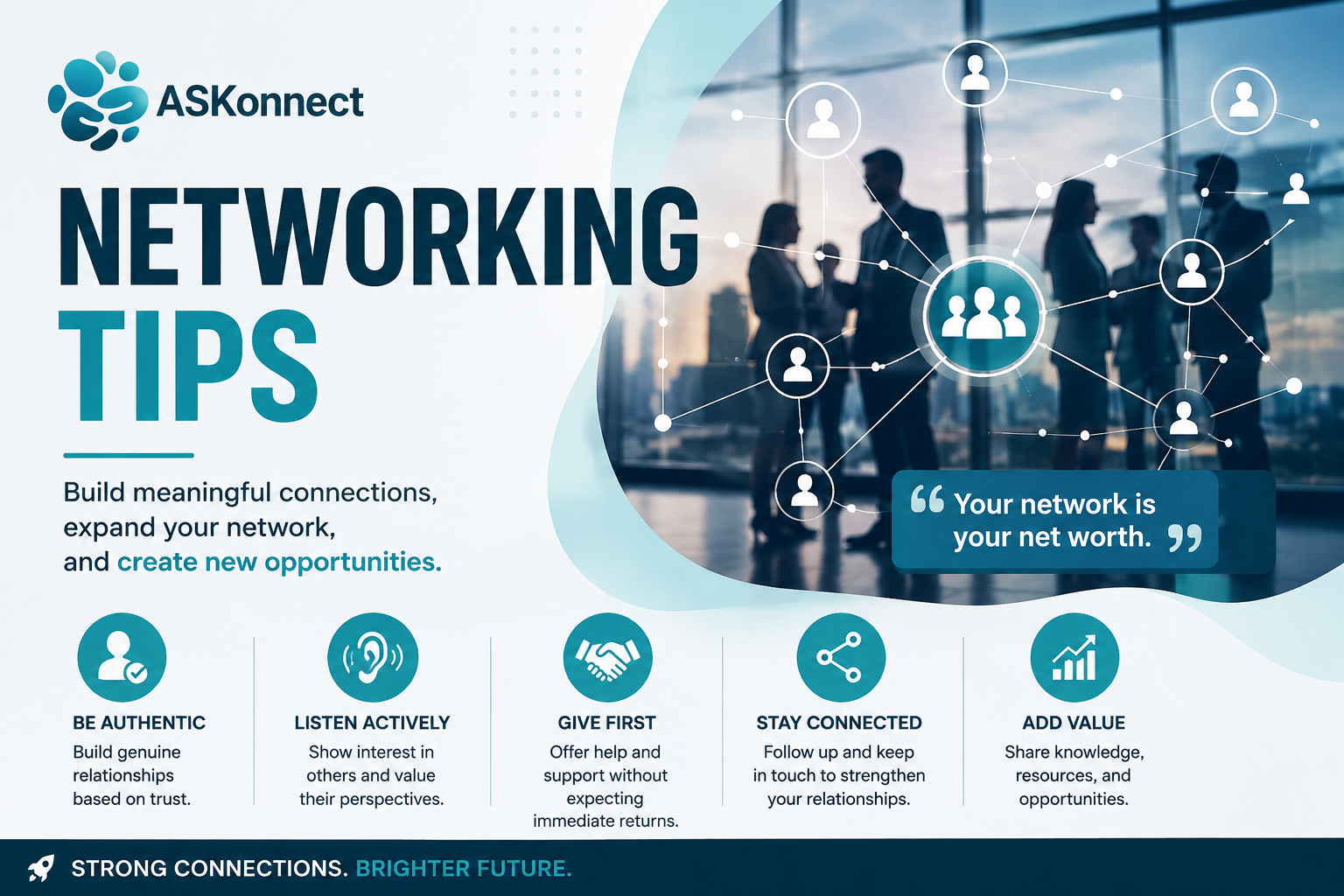
Building a strong professional network can open doors to opportunities that are often difficult to find through traditional job searches. Whether you are a student, entrepreneur, freelancer, job seeker, or experienced professional, knowing how to connect with the right people can help you discover new opportunities, exchange knowledge, and develop long-term professional relationships.
However, effective networking is not simply about collecting business cards, adding hundreds of people on LinkedIn, or asking someone for a job. Successful networking is about building genuine relationships and creating value for both sides.
In this guide, you will learn practical networking tips that can help you meet the right people, start meaningful conversations, maintain professional relationships, and turn connections into long-term opportunities.
What is Professional Networking?
Professional networking is the process of developing and maintaining relationships with people who share professional, educational, or industry-related interests.
Your network can include:
- Coworkers and former colleagues
- Industry professionals
- Business owners and entrepreneurs
- Clients and customers
- Recruiters and hiring managers
- Mentors and teachers
- University classmates and alumni
- Conference and event attendees
- Online professional communities
Networking can happen both online and offline. LinkedIn, industry conferences, seminars, workshops, professional associations, and even informal conversations can all become networking opportunities.
The goal is not to meet as many people as possible. Instead, focus on developing relevant, authentic, and mutually beneficial relationships.
Why is Networking Important?
Networking can play an important role in professional development. Many opportunities are discovered through personal recommendations, professional relationships, and conversations rather than public job advertisements.
A strong network can help you:
Discover Career Opportunities
People in your network may know about job openings, freelance projects, internships, or business opportunities before they are publicly advertised.
Learn From Experienced Professionals
Connecting with people who have experience in your field allows you to learn from their successes, mistakes, and practical knowledge.
Build Your Professional Reputation
Consistently sharing useful information and helping others can establish you as someone knowledgeable and reliable within your industry.
Find Mentors
Networking can introduce you to experienced professionals who can provide career guidance and help you make better professional decisions.
Develop Business Relationships
Entrepreneurs and freelancers can use networking to find potential clients, strategic partners, suppliers, and referral opportunities.
Effective Networking Tips you Should Know
Networking becomes much easier when you approach it with the right strategy. The following tips can help you build stronger and more meaningful professional relationships.
1. Define Your Networking Goals
Before attending an event or sending connection requests, determine what you want to achieve.
For example, your goal might be to:
- Find a new job
- Meet potential clients
- Learn about an industry
- Find a mentor
- Promote your business
- Explore career opportunities
- Build relationships with industry experts
Having a clear goal helps you identify the people and communities that are most relevant to you.
Instead of trying to connect with everyone, focus on quality over quantity.
2. Create a Strong Professional Introduction
You should be able to explain who you are and what you do clearly.
A simple introduction can include:
Who you are + what you do + what you are interested in.
For example:
“I’m a digital marketing professional specializing in SEO and content strategy. I’m currently interested in learning more about AI search and how businesses can adapt their organic growth strategies.”
Keep your introduction natural rather than sounding like a rehearsed sales pitch.
3. Listen More Than You Talk
One of the most overlooked networking tips is to become a good listener.
When meeting someone, avoid thinking only about what you will say next. Pay attention to their experience, interests, challenges, and goals.
Ask questions such as:
- “How did you get started in this industry?”
- “What projects are you currently working on?”
- “What changes are you seeing in your industry?”
- “What advice would you give someone entering this field?”
Good conversations are usually based on genuine curiosity.
4. Give Value Before Asking for Something
Effective networking should not immediately become a request.
If you meet someone and your first message is, “Can you give me a job?” you may put unnecessary pressure on the relationship.
Instead, look for ways to provide value.
You could:
- Share a useful resource
- Introduce them to someone relevant
- Recommend their work
- Give thoughtful feedback
- Share an industry insight
- Help solve a small problem
A relationship becomes stronger when both people benefit from it.
5. Personalize Connection Requests
Avoid sending the same generic message to everyone.
Instead of:
“I’d like to add you to my professional network.”
try mentioning something specific about the person.
For example:
“Hi Sarah, I came across your recent post about content marketing and found your point about search intent particularly useful. I’d be happy to connect and follow your insights.”
Personalization shows that you have made an effort to understand who you are contacting.
6. Attend Industry Events
Conferences, workshops, seminars, webinars, and professional meetups can provide excellent networking opportunities.
Before attending an event:
- Research the speakers.
- Identify relevant attendees.
- Prepare a short introduction.
- Think of a few questions.
- Set a realistic networking goal.
You don’t need to talk to everyone. Having three meaningful conversations can be more valuable than collecting dozens of contacts.
7. Join Professional Communities
Online communities can help you build relationships beyond traditional social media.
Look for communities related to your:
- Industry
- Profession
- Skills
- Local business environment
- Educational background
- Professional interests
Participate by answering questions, sharing useful resources, and contributing to discussions.
Simply joining a group is not networking. Active participation is what creates visibility and relationships.
8. Follow Up After Meeting Someone
One of the biggest networking mistakes is failing to follow up.
If you meet someone at an event, send a short message within a reasonable period.
For example:
“It was great meeting you at the marketing conference. I enjoyed our conversation about content strategy, especially your thoughts on how AI is changing search. I’d be happy to stay connected.”
A simple follow-up can turn a brief conversation into an ongoing professional relationship.
9. Stay in Touch Consistently
Networking should not only happen when you need something.
Stay connected by:
- Commenting on their posts
- Congratulating professional achievements
- Sharing useful resources
- Checking in occasionally
- Meeting for coffee when appropriate
- Discussing relevant industry developments
You don’t need to contact everyone every week. The goal is to remain genuinely connected rather than constantly asking for favors.
Networking Tips for Job Seekers
If you’re looking for a job, networking can complement traditional applications.
Start by identifying people working at companies or in industries that interest you.
You can then:
- Connect with relevant professionals.
- Engage with their content.
- Ask thoughtful questions.
- Learn about their career path.
- Share your relevant skills or portfolio.
- Ask for advice rather than immediately asking for a job.
- Follow up professionally.
A networking conversation doesn’t always result in a job—and that’s okay. The purpose is to develop relationships that can become valuable over time.
Networking Tips for Introverts
You don’t need to be highly outgoing to become good at networking.
If large events feel uncomfortable, start with smaller interactions.
Try:
- One-on-one meetings
- Online professional communities
- LinkedIn conversations
- Small workshops
- Industry webinars
- Alumni groups
- Professional email introductions
Prepare a few conversation starters before attending an event. Having questions ready can reduce the pressure of starting conversations.
Remember that networking is a skill, not a personality type.
Common Networking Mistakes to Avoid
Even well-intentioned networking can fail when it becomes overly transactional or inconsistent.
Avoid these common mistakes:
Only Networking When You Need a Job
If you disappear for months and suddenly contact someone asking for employment, the interaction can feel transactional.
Sending Generic Messages
Copy-and-paste messages rarely create meaningful conversations.
Talking Only About Yourself
Networking is a two-way relationship. Ask questions and show interest in other people’s experiences.
Asking for Too Much Too Soon
Don’t immediately request referrals, introductions, jobs, or major favors from someone you’ve just met.
Ignoring Follow-Ups
A connection without communication often becomes forgotten.
Focusing Only on the Number of Connections
Having 5,000 connections does not necessarily mean you have a strong network.
A smaller network of trusted and relevant professionals can be far more valuable.
How to Build a Networking Strategy?
A simple networking strategy can make your efforts more consistent.
Step 1: Identify Your Target Network
Determine which professionals, industries, companies, or communities are relevant to your goals.
Step 2: Choose Your Platforms
Select platforms where your target audience is active. For many professionals, LinkedIn is useful, while industry-specific communities and events can provide additional opportunities.
Step 3: Create Useful Content
Share practical insights, lessons learned, industry observations, or useful resources.
Step 4: Engage With Others
Comment thoughtfully on relevant posts and participate in professional discussions.
Step 5: Start Conversations
Send personalized messages when you have a genuine reason to connect.
Step 6: Follow Up
Maintain relationships instead of treating each connection as a one-time interaction.
Step 7: Review Your Progress
Every few months, evaluate whether your network is helping you learn, collaborate, discover opportunities, or achieve your professional goals.
Frequently Asked Questions About Networking
What is the most important networking tip?
The most important networking tip is to focus on building genuine relationships rather than immediately seeking personal benefits. Be curious, helpful, reliable, and consistent.
How can I network if I have no experience?
Start with classmates, teachers, alumni, online communities, industry professionals, and local events. You don’t need years of experience to have meaningful conversations or ask thoughtful questions.
How often should I network?
There is no universal schedule. Consistent, genuine interaction is more important than frequency. Even dedicating a small amount of time each week to professional networking can help you build relationships over time.
Is LinkedIn good for networking?
Yes. LinkedIn can be useful for discovering professionals, joining industry conversations, sharing expertise, and maintaining professional relationships. However, effective networking depends on how you engage with people—not simply how many connections you have.
Should I ask someone for a job when networking?
Usually, it’s better to start with a conversation and build a professional relationship. Once the person understands your background and goals, you can appropriately discuss relevant opportunities or ask whether they have advice about entering the company or industry.
How do I network without feeling awkward?
Prepare a few questions, focus on listening, and choose smaller conversations if large events feel uncomfortable. Remember that the other person may also appreciate having someone genuinely interested in their work.
Final Thoughts!!
Professional networking is not about collecting contacts. It is about building relationships based on trust, relevance, and mutual value.
The most effective networking strategy is simple: know what you want to achieve, connect with people genuinely, listen carefully, provide value, follow up, and maintain relationships over time.
Whether you’re searching for a job, growing a business, developing your career, or simply learning from experienced professionals, strong relationships can become one of your most valuable professional assets.
Start small. Reach out to one relevant person, have one meaningful conversation, and focus on creating a relationship rather than expecting an immediate result.
Looking to build meaningful professional connections and expand your opportunities? Contact us today to learn how we can help you get started.
Leave a Reply